


Early Crown Thinning
How to Track Early Crown Thinning With Better Signal
Crown changes are hard to judge without top-down consistency. This framework keeps every checkpoint comparable.
What this plan helps you do
Early crown-thinning tracking means documenting the top of the scalp with a mechanically consistent overhead setup so subtle directional change becomes easier to spot and false alarms become easier to dismiss.
When this guide is most useful
Use this when you want one practical tracking routine you can actually keep long enough to read a real trend.
By Balding AI Editorial Team · medically reviewed by Dr. Nga Nguyen (Dermatologist) · grounded in published clinical guidelines (AAD, NHS). Not medical advice or diagnosis.
Published: · Last updated:
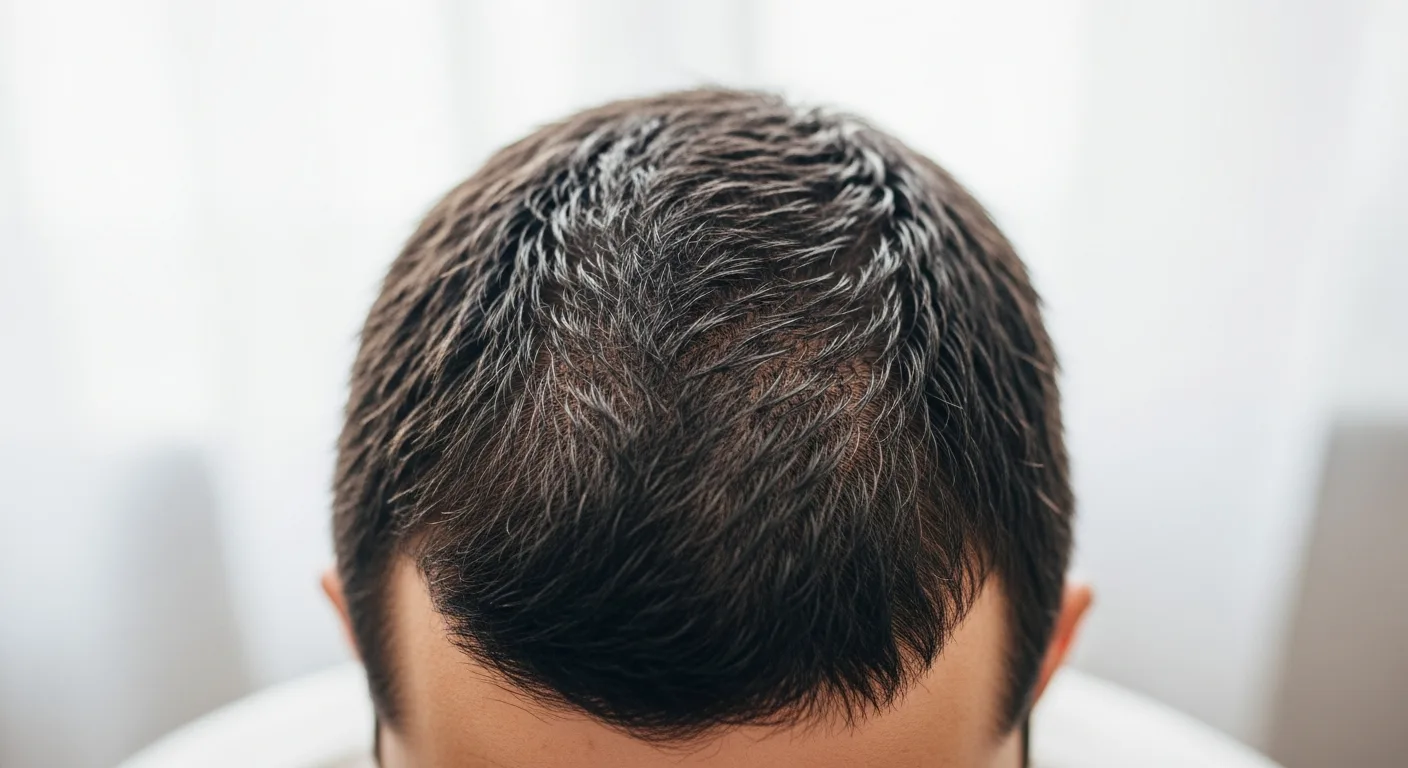
What this guide helps you read or decide
This guide helps you decide whether crown visibility is showing a real pattern or just reacting to lighting and hair-state changes. The question is whether the same top-down comparison keeps pointing the same way over time.
How to set up the comparison properly
Crown tracking depends heavily on top-down consistency. A slightly different overhead angle or stronger light can make the scalp look much more exposed than it really is.
- Use the same top-down angle and light source each session.
- Keep hair dryness consistent before every review.
- Capture the crown as its own dedicated view, not an afterthought.
What to review over time
Look for whether the crown view tells the same story over repeated monthly checkpoints. You are not trying to win one photo. You are trying to build a believable direction line.
- First month: lock the top-down setup.
- Second month: compare scalp visibility under matched conditions.
- Third month: decide whether the pattern now looks stable, worsening, or mixed.
Common reading mistakes and when to ask for help
The crown is one of the easiest areas to distort with lighting. If the top-down setup is finally consistent and the same worsening pattern still appears, that is the point where the record matters more than the feeling.
- Do not compare bright overhead light to softer ambient light.
- Do not judge the crown from mirror checks alone.
- Escalate when matched monthly crown views still point clearly in the wrong direction.
What to do next
Protect the top-down comparison and keep the review cadence monthly. The crown becomes easier to read when the setup gets boring enough to trust.
Questions and references
These answers focus on the practical difficulty of crown tracking: the angle is awkward, the setup is sensitive, and the review has to stay disciplined.
Why is crown tracking harder than frontal tracking?
The crown is harder to track because small changes in camera angle or height produce large visual differences, and because you have fewer natural landmarks to use for alignment. With frontal photos, your eyes, nose, and eyebrows provide built-in reference points that make it easy to tell whether two sessions are framed identically. The crown has no such features, so a camera that is tilted even slightly forward or backward will show a very different amount of scalp. This means that apparent changes in crown visibility can easily be artifacts of inconsistent setup rather than actual thinning or improvement, which is why mechanical consistency in your overhead capture position is so critical.
How can I improve crown comparison quality?
The most effective improvement is to fix your camera position mechanically rather than holding it freehand. Use a selfie stick extended to the same length each time, or position your phone on a shelf at a consistent height above a specific spot where you stand. Always use dry hair with the same styling or lack thereof, and capture at the same time relative to your last wash so oil and volume levels are comparable. Some people mark their standing position with tape on the floor and their camera position with a small mark on the wall or shelf. These small investments in setup discipline pay off enormously when you review your monthly comparison grid.
When should I escalate crown concerns?
Escalate when your monthly checkpoint data shows a sustained worsening pattern across two or more consecutive comparison periods, or when your trend-direction confidence remains low despite a consistent and well-controlled tracking setup. A single bad-looking session is not a reason to escalate, because crown photos are so sensitive to setup variation that one outlier is expected from time to time. But if your scorecard scores are trending downward over several months and your capture conditions have been genuinely consistent, that pattern is worth bringing to a dermatologist. They can perform a closer scalp examination and assess whether the changes warrant intervention.
What makes crown tracking finally feel trustworthy?
Crown tracking becomes trustworthy when the setup stops changing enough to compete with the hair itself. Once the overhead angle, distance, hair state, and wash timing are all repeatable, your monthly comparison stops feeling like a debate about photography and starts feeling like a read on the scalp. That is the threshold you want. If the process still depends on hoping you held the phone the same way, it is too loose. If you can recreate the shot almost mechanically, even small directional changes become much easier to trust.
What should I ignore when reviewing early crown photos?
Ignore one-off overhead scares that do not repeat under the same setup. Crown photos are so angle-sensitive that a single harsh-looking image often says more about camera position or hair state than about real progression. The useful question is whether the same crown pattern keeps showing up across matched monthly checkpoints. If it does not repeat, it should not drive the decision.
What is the main job of an early crown review?
Its job is simple: decide whether the same pattern repeats. If it does not repeat, it is usually noise, not proof.
Next reads and checkpoints
Use the links below after you finish the main early crown thinning guide if you want checkpoint-specific reading or adjacent tracking routes.
Related tracking guides
90-Day Hair Loss Treatment Tracker: Week by Week
First 90 Days Tracking
How to Track Early Signs of Hair Loss Objectively
Early Hair Loss Signs
How to Track Minoxidil Progress Without Guesswork
Minoxidil
How to Track Finasteride Results Over Time
Finasteride
How to Track Finasteride and Minoxidil Combination Results
Finasteride + Minoxidil
How to Track Oral Minoxidil Results Month by Month
Oral Minoxidil