


Microneedling
How to Track Microneedling Hair Growth Progress
Microneedling progress is easier to evaluate when you track treatment cadence, recovery context, and monthly directional changes together.
What this plan helps you do
Microneedling progress is easier to evaluate when you track treatment cadence, recovery context, and monthly directional changes together.
When this guide is most useful
Use this when you want one practical tracking routine you can actually keep long enough to read a real trend.
By Balding AI Editorial Team · medically reviewed by Dr. Nga Nguyen (Dermatologist) · grounded in published clinical guidelines (AAD, NHS). Not medical advice or diagnosis.
Published: · Last updated:
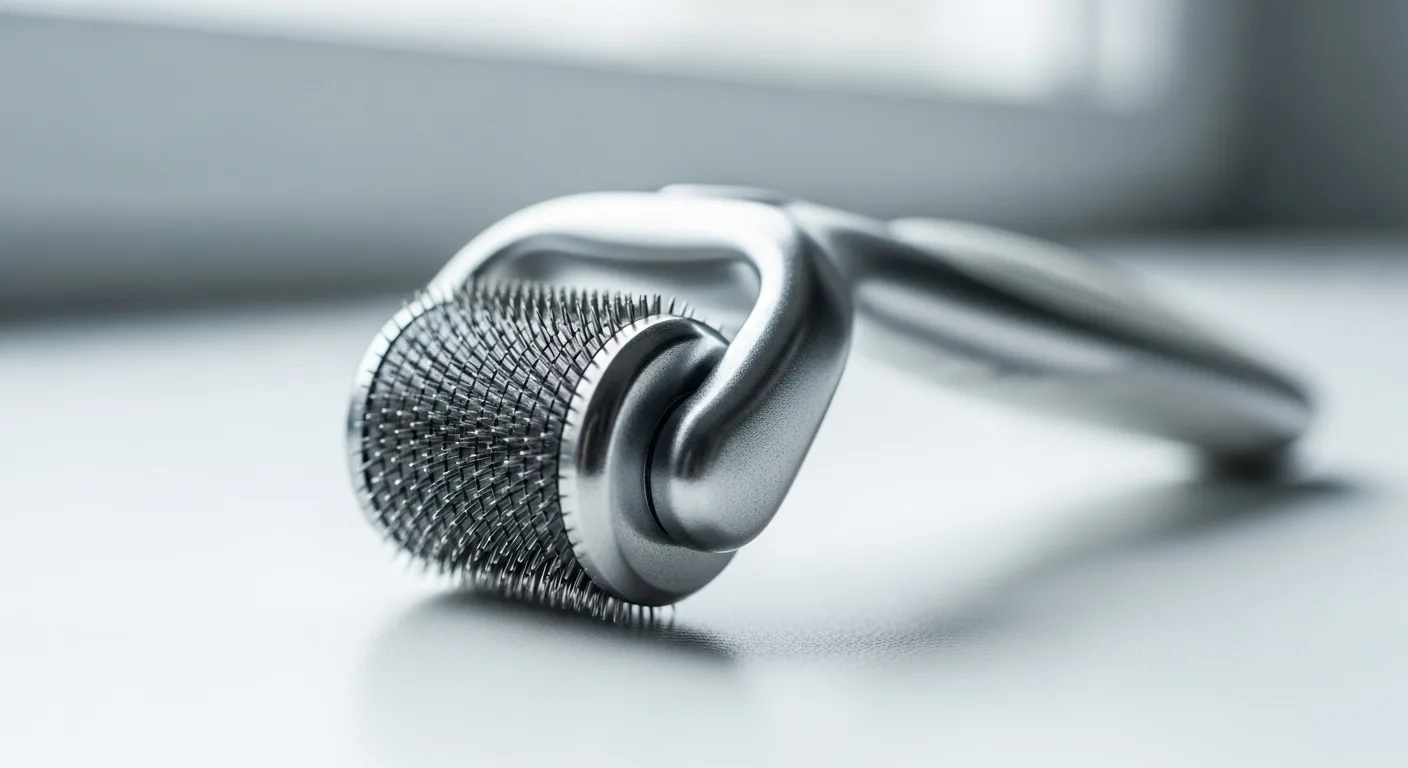
What this guide helps you read or decide
Use this guide to decide whether microneedling is being tracked in a way that can actually show direction. The important distinction is between a treatment cadence that is readable and one that only creates scattered snapshots.
How to set up the comparison properly
Microneedling is schedule-sensitive, so the comparison has to include timing, not just photos. If the cadence keeps changing, your record stops answering the question you care about.
- Log session dates and depth changes clearly.
- Keep the photo setup separate from the treatment session itself.
- Avoid changing the frequency without noting exactly when it changed.
What to review over time
Look at the trend across a stable block of sessions, then decide whether there is a believable directional change. Do not ask one recovery week to answer a multi-month treatment question.
- Early phase: confirm the cadence is stable.
- Middle phase: review matched monthly sets, not isolated sessions.
- Later phase: decide whether the schedule is worth maintaining or revisiting.
Common reading mistakes and when to ask for help
The biggest microneedling mistake is treating an inconsistent schedule like a controlled trial. If the cadence is stable and the record is still confusing, that is the point where a clinician conversation becomes useful.
- Do not compare weeks with different session timing as if they are equivalent.
- Do not add other major routine changes without logging them.
- Escalate if recovery concerns or unclear direction persist across a stable block.
What to do next
Keep the cadence simple and well-documented. A boring schedule with matched monthly reviews is much more useful than an ambitious one you cannot interpret later.
Questions and references
Microneedling tracking raises questions that other treatments do not, particularly around session timing and recovery context. These answers focus on how to build a tracking routine that accounts for the unique rhythms of microneedling.
How often should I review microneedling photo data?
Capture photos weekly at the same point in your microneedling recovery cycle, but reserve your actual trend evaluation for monthly reviews. Weekly photos are data collection -- they give you the raw material for comparison. Monthly reviews are where you sit down, pull up your checkpoint sets, and assess whether density and texture are moving in a clear direction. Trying to evaluate from individual weekly captures almost always leads to overreaction, because post-session recovery variation can mask or exaggerate real changes.
Should I track scalp response too?
Absolutely. Scalp recovery notes are uniquely important for microneedling because temporary redness, sensitivity, or flaking directly affects how your photos look in the days after each session. A simple note recording recovery intensity on a low-medium-high scale, along with any unusual reactions, gives you the context to explain short-term visual fluctuations that might otherwise look alarming. Over several months, these recovery notes also help you identify whether your scalp is adapting to the treatment or whether you need to adjust frequency or technique.
What is the biggest microneedling tracking mistake?
The biggest mistake is inconsistent photo setup, but with microneedling there is an additional layer: inconsistent timing within the treatment cycle. Taking one photo the day after a session and the next photo five days after a different session makes comparison meaningless, because your scalp looks different at each stage of recovery. Lock in both your physical setup -- same room, same lighting, same distance -- and your cycle timing. When both are consistent, even subtle density changes become visible over a three-to-six month tracking window.
What makes microneedling progress easier to trust?
Trust usually comes from repetition at the same point in the cycle, not from dramatic cosmetic wins. If your photos are always taken at the same recovery interval, your session frequency is logged clearly, and your scalp response stays within a normal range, the monthly comparisons become much easier to believe. That matters because microneedling can look noisy in short windows. A trustworthy record is one where the timing, setup, and recovery context are boringly consistent enough that a subtle improvement in temple fill or crown texture actually means something.
Next reads and checkpoints
Use the links below after you finish the main microneedling guide if you want checkpoint-specific reading or adjacent tracking routes.
Month-by-month guides and related reading
Related tracking guides
How to Track Minoxidil Progress Without Guesswork
Minoxidil
How to Track PRP Hair Treatment Progress
PRP
90-Day Hair Loss Treatment Tracker: Week by Week
First 90 Days Tracking
How to Track Early Signs of Hair Loss Objectively
Early Hair Loss Signs
How to Track Finasteride Results Over Time
Finasteride
How to Track Finasteride and Minoxidil Combination Results
Finasteride + Minoxidil
How to Track Oral Minoxidil Results Month by Month
Oral Minoxidil